

Why Quality Matters More Than Quantity When It Comes to Screen Time
Jump to Section
Want to see more?
Bring the power of GoGuardian to your school or district today.
Summary
- District-managed instructional technology serves a fundamentally different purpose than recreational screen use.
- The most effective classrooms use technology intentionally, rather than continuously, to deepen learning.
- Educators should evaluate the quality and purpose of digital learning experiences instead of simply counting minutes.
- Moving beyond the "screen time" debate allows schools to focus on what truly impacts student outcomes.
If you've spent any time following education headlines over the past year, you've probably noticed a common theme: Screen time. Legislatures are proposing limits, communities are asking questions, and caregivers are understandably concerned about how much time students spend looking at devices.
Those conversations are important, but many education leaders believe they're focused on the wrong question. During GoGuardian's recent webinar, “Beyond the Ban: Building a Managed Access Approach to Screen Time,” district leaders and classroom educators agreed on one central idea: The conversation shouldn't begin with how much technology students use, but rather how they're using it.
Not all screen time is the same
One of the biggest misconceptions surrounding classroom technology is treating every minute in front of a screen as equal. Dr. Adam Miller, Chief of Performance Accountability for the School District of Palm Beach County, Florida, stated there is definitely a distinction to be made.
"Are we talking about algorithm-driven social media...or are we talking about goal-oriented academic-focused district applications on district-managed devices that are well thought out? All screen time is not the same screen time,” he clarified.
The conversations dominating social media, as well as many legislative proposals, often focus on passive entertainment, endless scrolling, and platforms specifically designed to maximize attention. Schools, however, are talking about something entirely different.
District-managed devices are used for research, collaboration, writing, formative assessment, personalized instruction, and access to curriculum. Those experiences are intentional, teacher-guided, and tied directly to learning outcomes.
Lumping those experiences together under a single "screen time" label oversimplifies a much more nuanced reality. The question shouldn’t necessarily be "How long?" Instead, educators are asking a different question about why and for what purpose.
What is the purpose of the technology in the classroom?
Ashley Cowger, Chief Systems Officer for Indianapolis Public Schools, returned to that idea throughout the webinar. Reflecting on her own experience as a student, she shared a lesson that continues to shape how she thinks about educational technology today.
"I remember my teachers being scared about how we were using graphing calculators. I had this really great calculus teacher at the time, and he said ‘we have to understand what the intent of the graphing calculator is, and then we have to understand time and place.’”
Today, she applies that same framework to every digital tool introduced in classrooms. Rather than asking whether students should or shouldn't use technology, educators should ask:
- What is the instructional purpose?
- Does this tool help students learn?
- Is this the appropriate time and place to use it?
These questions move the conversation away from blanket rules and toward thoughtful instructional decisions.
Technology should enhance, not replace, learning
The panel also emphasized that effective technology integration doesn't mean students spend every minute on a device. Tyler Brown, a sixth-grade teacher from Indian River Central School District in New York, summarized the philosophy that's guided his own work in classrooms: "Technology should be an enhancement, not a replacement."
That principle may sound simple, but it fundamentally changes how teachers make instructional decisions. Technology isn't valuable simply because it's digital. It's valuable when it helps students do something they couldn't otherwise do, or helps them do it more effectively.
Brown illustrated this with a science lesson. Students could certainly learn about tectonic plates from a still image. But watching an animation that demonstrates how those plates move provides a richer understanding than a static diagram alone.
"If it's not going to deepen their learning, if it's not going to enhance, then we don't need to use the technology,” he explained. Intentionality, not simply device access, is what creates meaningful learning experiences.
Active engagement vs. passive scrolling
Another recurring theme throughout the webinar was the difference between active and passive technology use. Cowger noted much of the public conversation has been shaped by concerns about recreational screen use rather than classroom instruction.
"There is passive scrolling, which we all do on social media and on the Internet, and then there is active engagement with technology, which is what we do in classrooms,” she explained. The distinction matters, as passive scrolling asks very little of students. Intentional classroom technology asks students to research, create, analyze, collaborate, solve problems, and communicate. Both involve screens, but only one supports learning.
Recognizing that difference helps districts have more productive conversations with caregivers and community members who may understandably worry about increasing device use.
Quality over quantity
Perhaps the strongest takeaway from the webinar is that educators don't dismiss concerns about screen time. Instead, they're encouraging everyone, including district leaders, caregivers, policymakers, and communities, to ask better questions.
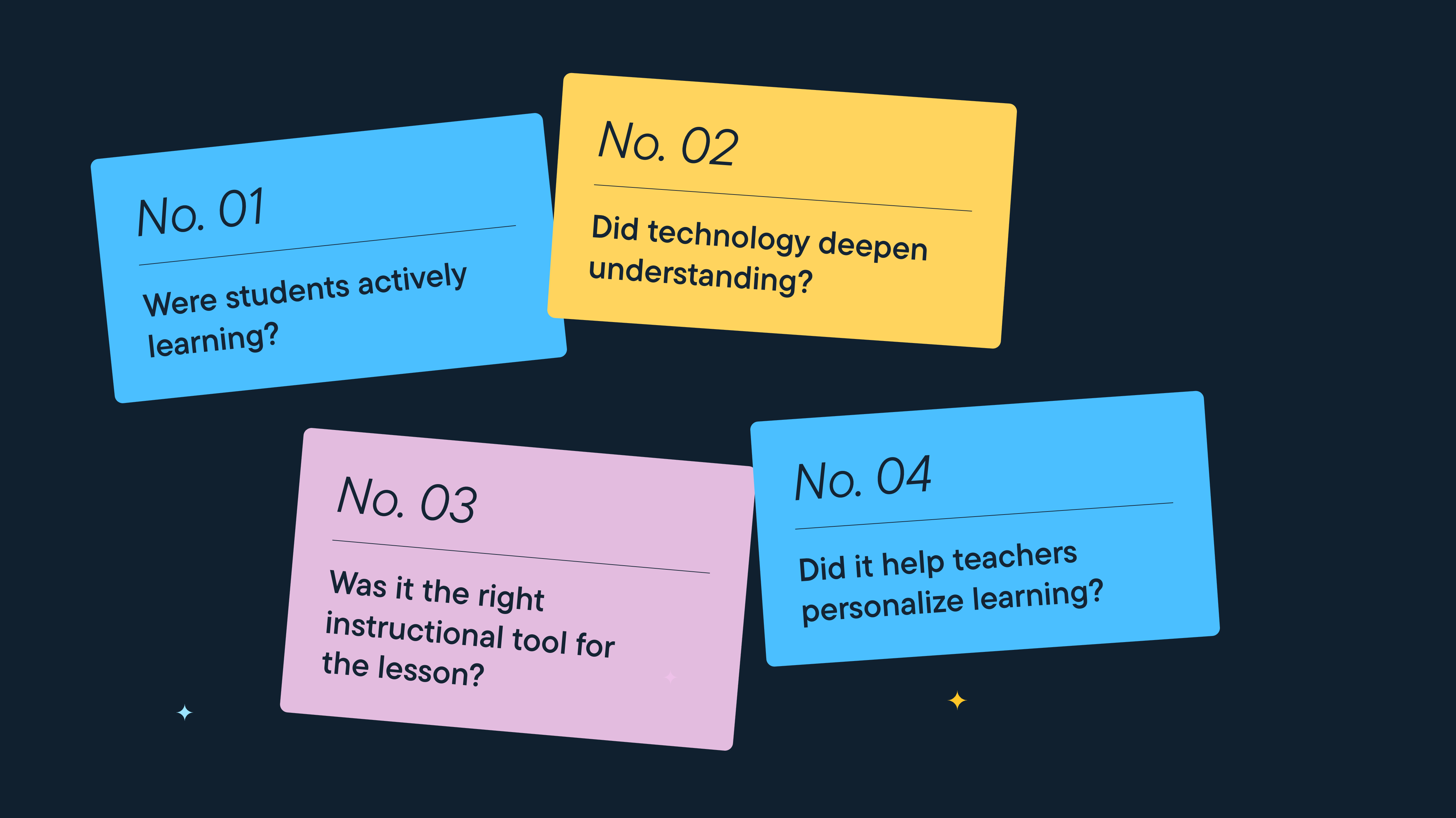
Rather than measuring success by the number of minutes students spend on devices, schools should evaluate whether technology is:
- Supporting instructional goals
- Deepening understanding
- Increasing student engagement
- Providing equitable access to learning opportunities
- Helping teachers personalize instruction
Looking beyond the debate
As AI becomes more common in schools and states continue to introduce new legislation on technology use, districts will continue to face difficult questions. But if this panel demonstrates anything, it's that educators aren't advocating for more screen time, but rather better screen time.
That means using technology in a way that is purposeful, intentional, and instructionally sound. Because when technology is used thoughtfully, the conversation shifts from the screens themselves to the learning being done on those devices.
Be sure to check out the recording of the webinar to learn more from Ashley Cowger, Tyler Brown, and Dr. Adam Miller.

GoGuardian Team
Related Posts
Better Screen Time Policy Starts with Asking Better Questions
As states weigh classroom screen time limits, education leaders urge a nuanced approach focused on quality instruction, educator trust, and future readiness.
Rethinking Screen Time: What District Leaders Actually Recommend
As districts reconsider 1:1 devices over screen time concerns, education leaders say the answer isn't fewer devices, but more intentional instruction.

Benefits and Challenges of Technology in the Classroom
Learn how to move from screen time to screen value, and how GoGuardian helps teachers keep classroom tech focused, safe, and worth every minute.
Bring the power of GoGuardian to your school or district today.