

Rethinking Screen Time: What District Leaders Actually Recommend
Jump to Section
Want to see more?
Bring the power of GoGuardian to your school or district today.
Summary
- District leaders continue to support one-to-one programs because they expand access to learning, collaboration, and personalized instruction.
- Successful one-to-one initiatives depend on thoughtful implementation, not simply putting devices in students' hands.
- Technology should enhance teaching, never replace it.
- Schools that focus on intentional, instructional use are finding devices remain one of the most valuable tools in the classroom.
One-to-one device programs have become commonplace in K-12 education. For many districts, every student having access to a Chromebook or laptop is no longer a luxury. This is how learning happens and prepares learners for the future.
Yet as concerns about student screen time have intensified, some districts have begun to question whether one-to-one initiatives should continue. They are wondering:
- Should we scale device use back?
- Should younger students have less access?
- Should we rethink our technology investments altogether?
During GoGuardian's webinar, “Beyond the Ban: Building a Managed Access Approach to Screen Time,” district leaders and classroom educators offered a different perspective. Rather than abandoning one-to-one learning, they argued schools should focus on using those devices more intentionally.
One-to-one learning didn't begin with the pandemic
Ashley Cowger, Chief Systems Officer for Indianapolis Public Schools, explained that digital curriculum has become part of how schools teach every day. "Education technology and learning curriculum via technology is not something that just showed up at the beginning of COVID. It existed long before COVID happened." For many districts, technology was already deeply embedded in instruction long before remote learning became necessary.
All of the following rely on students having consistent access to district-managed devices:
- Core curriculum
- Supplemental learning platforms
- Digital assessments
- Accessibility supports
- Personalized learning tools
For many schools, stepping away from one-to-one programs would mean stepping away from instructional practices that have become integral to teaching and learning.
Devices don't improve learning, but good instruction does
One of the strongest messages throughout the discussion was that devices themselves are just tools. It takes a trained educator to bring out their true potential.
Tyler Brown, a sixth-grade teacher from Indian River Central School District in New York, emphasized a principle he learned during graduate school that continues to guide his classroom today. "Technology should be an enhancement, not a replacement."
Great teaching doesn't happen just because students have laptops; it happens because teachers intentionally choose when and when not to use technology. Sometimes that means students collaborate on a shared document or watch an animation that makes a difficult concept easier to understand. Other times, it means closing the laptop completely.
The presence of devices doesn't dictate instruction. Instruction dictates whether the device belongs in the lesson.
Strategic application matters more than constant use
One concern often raised by caregivers is the assumption that one-to-one means students spend the entire day staring at screens. Brown described classrooms where technology is just one instructional station among many. Some students may be researching while others are completing a hands-on lab. Others could be receiving personalized intervention while classmates participate in collaborative discussion.
Cowger described this philosophy as focusing on "the strategic application of those devices during learning times throughout the day." There is a definite distinction between using technology for technology’s sake, and actually ensuring it adds rather than subtracts from learning opportunities.
One-to-one also supports educational equity
It’s not something everyone might think about, but it’s important to note that not every student has reliable internet or technology access at home.
Brown, who teaches in rural upstate New York, explained why district devices remain essential for many of his students. "I have some students who don't have Internet at home, so this might be their only opportunity to engage in those types of academic scenarios where they're doing that type of research." One-to-one programs help ensure every student, not just those with resources at home, can access the same learning opportunities.
Dr. Adam Miller, Chief of Performance Accountability for the School District of Palm Beach County, Florida, believes that when one-to-one initiatives struggle, the devices themselves usually aren't the problem. "I've seen one-to-one deployments fail for a lot of reasons. It's usually poor planning, implementation, or maybe your network isn't set up correctly,” he explained.
Successful programs require more than just purchasing hardware and expecting it to be used properly. They require:
- Reliable infrastructure
- Secure content filtering
- Curriculum alignment
- Teacher professional development
- Clear instructional expectations
- Ongoing collaboration between IT and curriculum teams
Without those elements, even the best technology can fall short.
Looking beyond the device
Perhaps the most important takeaway from the webinar is that conversations about one-to-one programs shouldn't revolve around hardware, but the teaching methods themselves. Learners require laptops to complete their work in a way that will set them up for success in higher grades and beyond. They help students think more deeply, collaborate more effectively, and access learning they otherwise couldn't.
Be sure to check out the recording of the webinar to learn more from Ashley Cowger, Tyler Brown, and Dr. Adam Miller.

GoGuardian Team
Related Posts
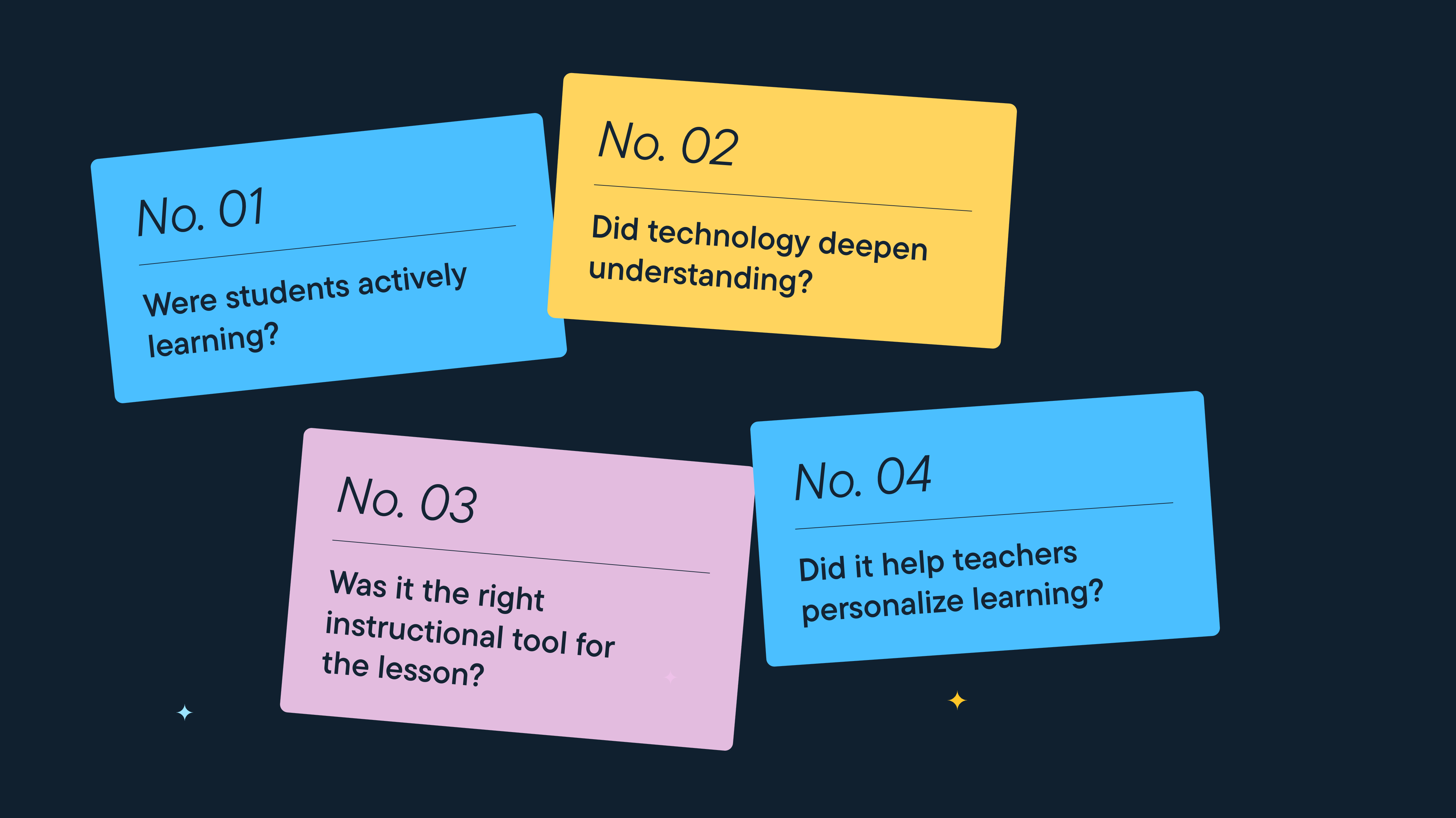
Better Screen Time Policy Starts with Asking Better Questions
As states weigh classroom screen time limits, education leaders urge a nuanced approach focused on quality instruction, educator trust, and future readiness.
Why Quality Matters More Than Quantity When It Comes to Screen Time
Education leaders say focus less on screen time limits and more on how technology supports student learning.

Benefits and Challenges of Technology in the Classroom
Learn how to move from screen time to screen value, and how GoGuardian helps teachers keep classroom tech focused, safe, and worth every minute.
Bring the power of GoGuardian to your school or district today.