

Better Screen Time Policy Starts with Asking Better Questions
Jump to Section
Want to see more?
Bring the power of GoGuardian to your school or district today.
Summary
- Blanket screen time limits fail to distinguish between passive entertainment and purposeful classroom learning.
- Education leaders believe policy should prioritize instructional quality over arbitrary time limits.
- Teachers and district leaders should have a voice in shaping legislation that impacts classrooms.
- Preparing students for a technology-driven future requires thoughtful use of digital tools, not reducing access to them.
Across the country, lawmakers are introducing legislation aimed at reducing student screen time. While it’s understandable that caregivers, educators, and policymakers all desire to improve student well-being and help young people develop healthy relationships with technology, they should also take into consideration what many district leaders and classroom educators believe: Many of these proposals start with the wrong assumption.
Instead of asking how technology supports learning, these policies are focusing almost exclusively on how long students spend on devices. During GoGuardian's webinar, “Beyond the Ban: Building a Managed Access Approach to Screen Time,” education leaders from across the country argued meaningful policy should be built around instructional purpose rather than arbitrary time limits.
Good intentions don't always create good policy
Few educators would argue against protecting students' mental health. In fact, the panel agreed lawmakers are right to pay attention to the growing concerns surrounding youth technology use.
Dr. Adam Miller, Chief of Performance Accountability for the School District of Palm Beach County in Florida, acknowledged that worry while pointing out an important distinction. "They're correct to be alarmed by the youth mental health crisis...there are harms for unregulated phone-based childhoods with that endless doomscrolling,” he insisted.
Where he and many educators see the conversation going off course is when all technology use is treated the same. District-managed instructional devices are fundamentally different from social media platforms designed to capture and hold students' attention.
Minutes don't tell the whole story
Several states have considered legislation that would cap the amount of time students spend on district-issued devices. While those proposals may appear straightforward, educators say they overlook how classrooms actually function.
Miller explained that focusing solely on the clock ignores what students are actually doing. "The American Academy of Pediatrics explicitly advises against focusing on time limits. Instead, they advocate...that you need to evaluate the quality and intentionality of that digital interaction."
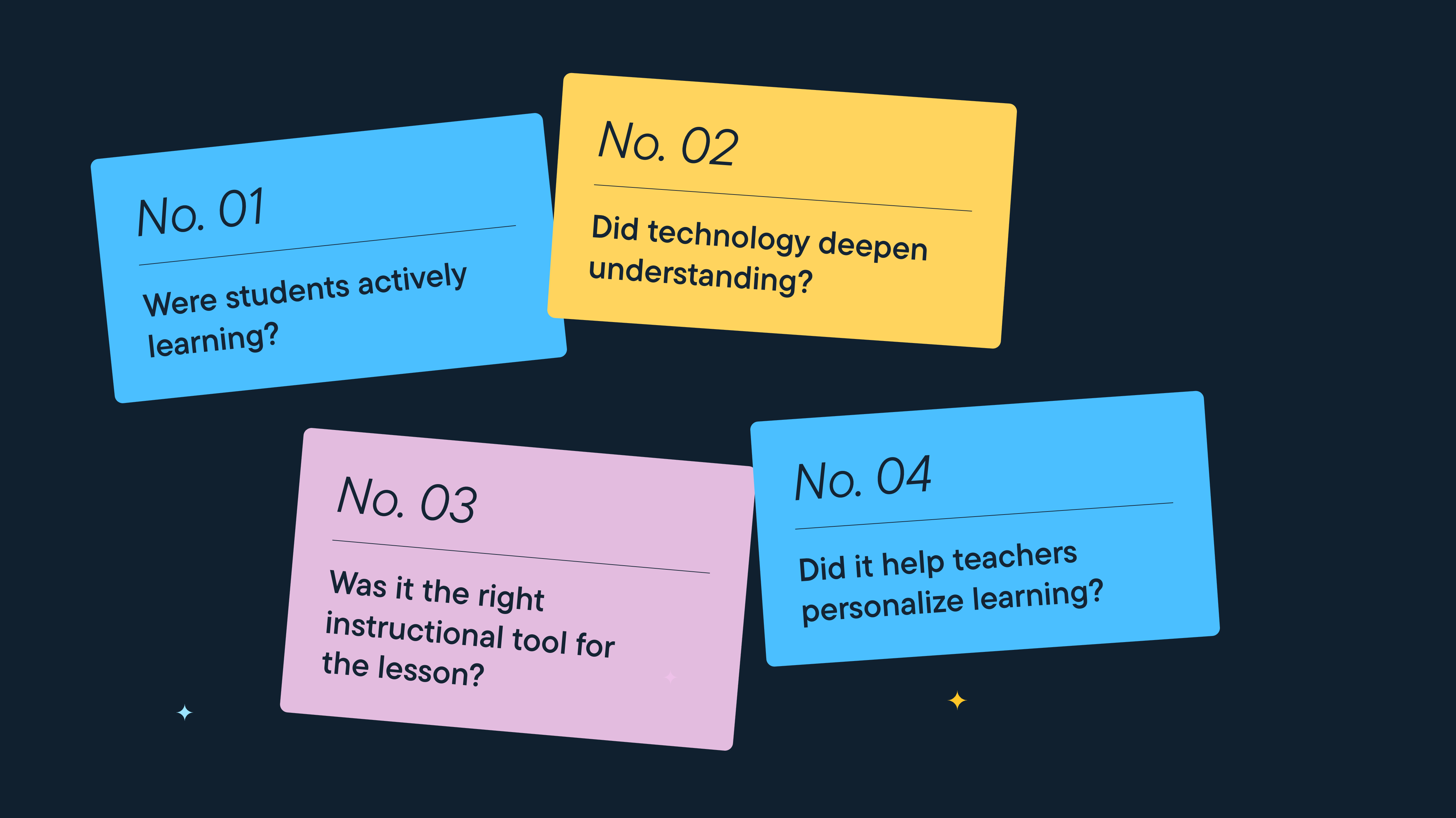
Instead of asking whether students spent 30 or 60 minutes using a device, those with concerns should be asking:
- Were students actively learning?
- Did technology deepen understanding?
- Was it the right instructional tool for the lesson?
- Did it help teachers personalize learning?
Arbitrary limits create unintended consequences
Policies built around time caps may sound simple, but the implementation is the tricky part. Tyler Brown, a sixth-grade teacher from Indian River Central School District in New York, described what happens when schools are asked to manage rigid screen time limits across multiple classrooms and subjects. "What that does for us as teachers is it puts more on our plate...We all now have to come up with this plan of how much time is each person spending."
The result, he argued, is teachers spend more time tracking minutes than designing meaningful learning experiences. Brown continued, "We're going to lose that team cross-curricular planning time to identify how long everybody is spending on their device." Ironically, policies intended to improve instruction can end up adding administrative complexity that distracts from it.
Trust educators to make instructional decisions
Throughout the webinar, one message surfaced repeatedly: Teachers already make instructional choices every day. They decide when students should collaborate, read independently, or work hands-on. This also means it’s up to them to decide when technology actually adds value.
Ashley Cowger, Chief Systems Officer for Indianapolis Public Schools, believes policy should reinforce those professional decisions rather than replace them. “So perhaps policy language is really about setting expectations around how technology is intended to function as an instructional tool. I think we can also lean into the idea that, even with technology in the classroom, life skills are still essential and must continue to be taught.”
Rather than prescribing the number of minutes students may use technology, policy can establish expectations around intentional instructional use while allowing educators the flexibility to meet the needs of their students.
Advocacy starts with education
Dr. Miller encouraged educators to focus on helping policymakers understand both the research and purpose behind instructional technology. "I think it's just educating the lawmakers on what the research really says and why...we're using technology, why we have these screens in the classroom, showing them how intentional we are."
Adding that advocacy is part of the process, Cowger encouraged educators to understand the pathways available for engaging with policymakers, whether through professional associations, direct outreach, or public comment. "Exercise your right to make public comments about those bills and reach out to the lawmakers."
Brown offered perhaps the most practical suggestion: Instead of asking lawmakers to imagine effective technology integration, invite them to see it firsthand in a real classroom. "Come look at what we're doing instead of just reading what you're reading online...Seeing that in person is going to help them understand it more."
Preparing students for the future
The conversation around classroom technology is often framed as a choice between protecting students and embracing innovation. The reality is that schools can, and should, do both.
Students need opportunities to learn healthy technology habits and to develop the digital literacy, collaboration, research, and critical-thinking skills they'll use long after graduation. When policymakers, educators, and communities work together with a baseline understanding of how devices are used in the classroom, the conversation can move beyond counting minutes and toward improving learning environments.
Be sure to check out the recording of the webinar to learn more from Ashley Cowger, Tyler Brown, and Dr. Adam Miller.

GoGuardian Team
Related Posts

How GoGuardian Can Help Your District Manage AI Governance
Education leaders share what districts are already facing, and how GoGuardian helps.

Rethinking Screen Time: What District Leaders Actually Recommend
As districts reconsider 1:1 devices over screen time concerns, education leaders say the answer isn't fewer devices, but more intentional instruction.
Why Quality Matters More Than Quantity When It Comes to Screen Time
Education leaders say focus less on screen time limits and more on how technology supports student learning.
Bring the power of GoGuardian to your school or district today.